

We help South Florida businesses with 15+ employees get reliable IT support.
Let's onboard you for free, lock in your rate, and handle the switch.




More help desk coverage rarely solves recurring outages. The real improvement in uptime comes from redesigning your network and cloud hosting, not from expanding support staff.
A support ticket gets filed, a technician resets something, the system comes back up, and weeks later the same failure happens again. That loop repeats because the fix addresses the symptom on the screen, not the design decision that caused it.
More help desk staff can only answer the phone faster; they cannot redesign the network underneath it.
That gap explains a pattern many businesses recognize: outages keep returning no matter how much support coverage gets added. The real explanation usually sits deeper in the technology stack, below the level where day-to-day troubleshooting happens.
A dependable setup isn't just about fixing what's broken—it's about building systems that don't break in the first place. How a network and its cloud hosting are architected has more bearing on uptime than how many people pick up the phone when something fails. Grasping that distinction changes where a business spends money: instead of layering on more support, it can address the structure that keeps generating the calls in the first place. The shift saves both time and money.
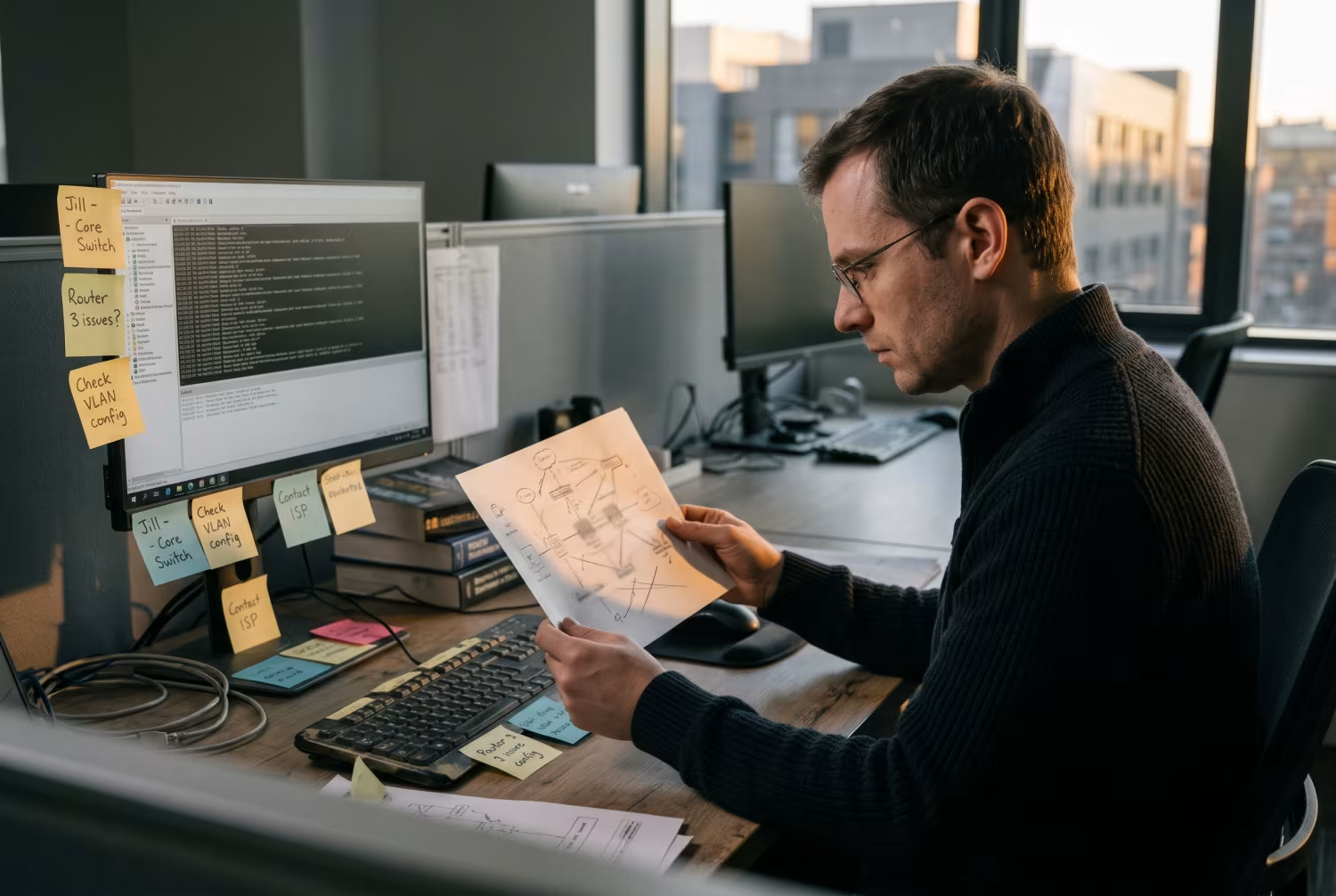
Adding help desk staff feels like the obvious response to frequent IT problems, since faster replies seem like they should keep the business running smoothly. In practice, though, faster replies only mask the cause instead of removing it.
When the same failure resurfaces again and again, the underlying network or cloud hosting setup is usually the source. A help desk team can reset a password, restart a server, or walk a user through a workaround, but none of that touches a poorly designed core system—so the fix never outlasts the next incident.
Over time, that pattern turns extra support staff into a rising cost that doesn't buy less downtime. Each repeat call is really a signal that something deeper needs attention, and responding to that signal with more headcount rather than better infrastructure design just funds the same problem indefinitely.
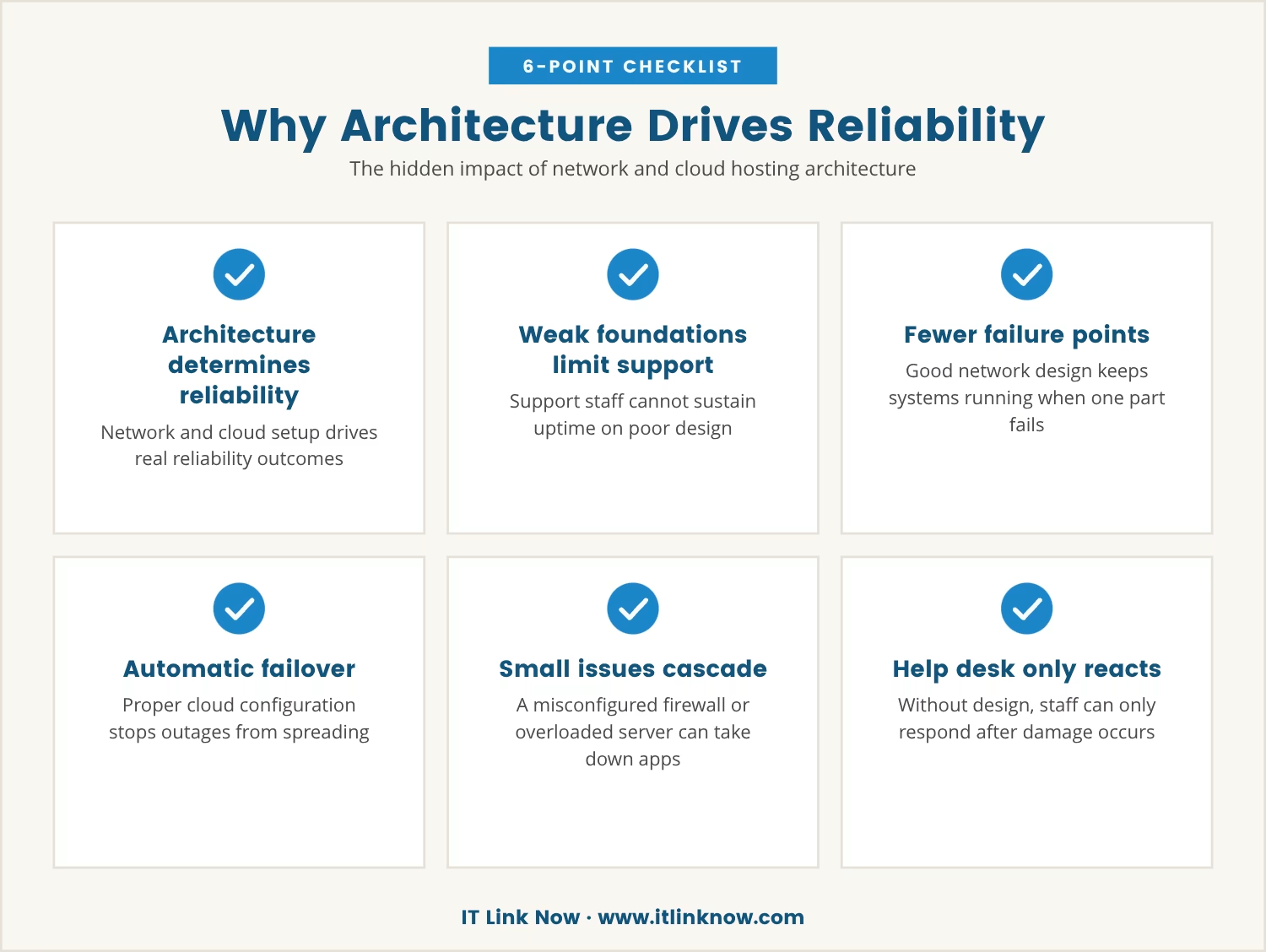
Underneath every support ticket sits the architecture of the network and cloud hosting that the business runs on, and that architecture is what actually determines reliability. A weak foundation means no amount of support staff can keep things running smoothly for long.
A well-designed network cuts down on single points of failure, so when one part goes down, the rest of the system keeps working. Cloud hosting, configured correctly, adds automatic failover and backup paths that stop a single outage from spreading into a company-wide one.
Skip that design work, though, and even a minor glitch can cascade into a major outage: a misconfigured firewall or one overloaded server is enough to take down a critical application. At that point, help desk staff can only react to the damage—they have no way to stop it from happening again.
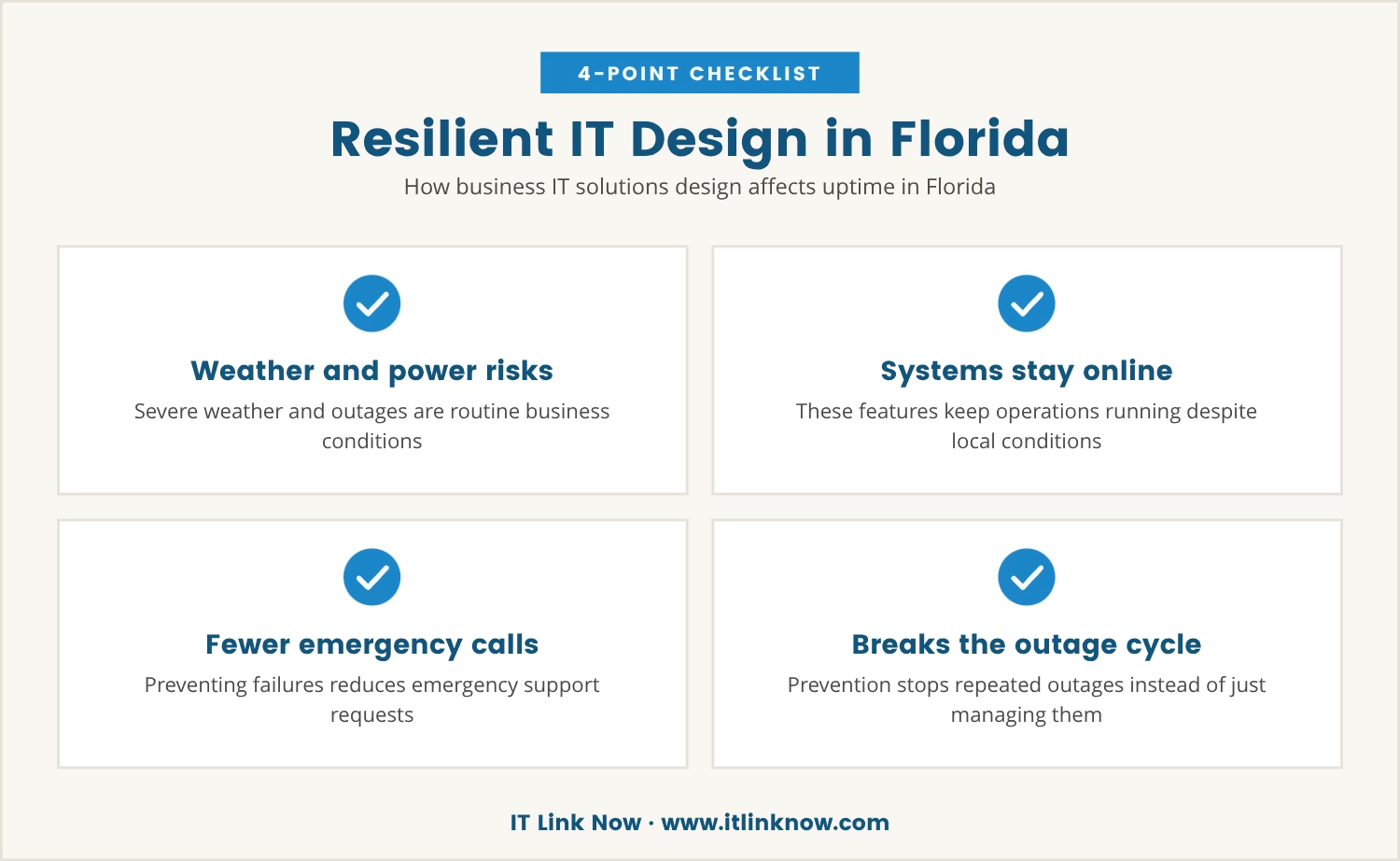
Florida businesses carry an added layer of risk, since severe weather and power interruptions are a regular part of operating there. How business IT solutions are designed determines how well a company weathers those disruptions rather than simply reacting to them afterward.
A sound architecture builds in redundant internet connections, offsite backups, and cloud services that scale on demand. Together, those features keep systems online even when local conditions turn against them.
Because that design work heads off failures before they start, it also reduces how often emergency support calls happen in the first place. That's what breaks the cycle of repeated outages and climbing costs, rather than just managing it one incident at a time.
A resilient setup is built from several elements working together, not from any single quick fix. The sections below cover the ones that matter most.
Backup connections and backup hardware mean that when one part fails, the business keeps running anyway. That alone removes most of the risk of a total outage.
Cloud platforms built to grow alongside the business prevent the overloads and service interruptions that show up as demand increases.
Regular, automated backups paired with a clear disaster recovery plan let a business bounce back quickly from the unexpected, which keeps downtime to a minimum.
Monitoring that flags problems early gives a team the chance to fix small issues before they grow into outages.
Restricting who can reach sensitive systems cuts down on disruptions, whether accidental or intentional.
Clear documentation means the team can respond quickly and correctly when something goes wrong, which speeds up recovery.
Downtime that keeps recurring does more than slow a business down for an afternoon—it chips away at reputation and revenue together. Every minute systems stay down, productivity drops, and customers looking for a dependable alternative may not come back.
As outages pile up, staff grow frustrated and start to lose confidence in the IT setup around them, which in turn leads to more mistakes, slower recoveries, and higher turnover among support teams.
Investing in better architecture upfront can look expensive next to a smaller support contract, but it tends to save money over time: fewer outages mean less need for constant support and less exposure to the hidden costs of lost business.
None of this makes the help desk useless. It handles user questions, resolves small problems, and keeps daily operations moving. What it cannot do is fix a system that's broken at its core.
Lean on support staff alone, and a business risks falling into a loop where the same problems keep resurfacing. Treating the help desk as a safety net, while the main investment goes into a stronger IT foundation, breaks that loop instead of just managing it.
That shift lets the support team work more efficiently and spares the business the frustration of outages that keep coming back.
Given all of that, directing an IT budget toward infrastructure design, rather than toward more support staff, is what actually transforms a business's reliability. Systems built to catch problems before they reach users mean less time and money spent chasing the same recurring issues.
None of this requires cutting the help desk; it means giving that team a stronger foundation to work from. The payoff is fewer outages, lower costs, and a smoother day-to-day experience for everyone in the company.

Many businesses with 15 to 70 users find themselves stuck in a cycle of recurring IT issues, even as support costs rise. At IT Link Now, we understand how frustrating it is to keep facing the same problems.
We invite you to see how our team approaches IT architecture and support differently. Let’s talk about what’s underneath your recurring issues and how a stronger foundation could change your experience.
Get free onboarding from IT Link Now with no price increases or surprise bills—designed for businesses ready to solve recurring IT problems for good.
[.mspl-button-text]Start free onboarding[.mspl-button-text]
The same technical issues recurring, or downtime increasing despite more support staff, are both signs it's time to review the IT setup. A professional assessment can pinpoint weaknesses in the network and cloud hosting design driving those patterns.
Help desk support handles immediate user problems, such as password resets or software errors. Managed IT services take a broader approach, covering ongoing maintenance, monitoring, and improvements across the entire IT environment.
South Florida's exposure to storms and power outages makes disaster recovery planning essential rather than optional. Clear recovery steps paired with reliable backups let a business recover quickly and cut the risk of losing data.
Cloud hosting brings flexibility and built-in redundancy that keep systems running even when local hardware fails. It also makes scaling easier as the business grows.
Sharing business goals and challenges openly is the starting point. Regular check-ins and clear communication help an IT provider design solutions that fit those needs and head off recurring issues before they start.
We help South Florida businesses with 15+ employees get reliable IT support.
Let's onboard you for free, lock in your rate, and handle the switch.