

We help South Florida businesses with 15+ employees get reliable IT support.
Let's onboard you for free, lock in your rate, and handle the switch.




The most valuable benefits of managed IT services only become clear after months of steady, proactive work. Judging a provider too early can mean missing out on improvements that compound over time.
When a managed IT relationship breaks down quietly, the costs show up as a server that crashes at the worst moment, a compliance deadline missed, or a vendor dispute that drags on for weeks while nobody takes ownership of it.
These are the stakes behind the benefits of managed IT services, and they explain why the timeline for realizing those benefits matters as much as the services themselves.
Businesses often expect the payoff to show up right away. In practice, the impact is shaped by what happens behind the scenes—steady maintenance, regular updates, and careful vendor coordination that take time to compound.
A single fix or upgrade rarely changes everything overnight. Managed IT service providers build value gradually instead, as their proactive approach starts to prevent issues before you even notice they were brewing. The most valuable results, as a consequence, only become visible after months of consistent, behind-the-scenes effort.
That delay creates a real risk: judge a managed IT partner too quickly, and you might miss the improvements that only surface once their processes have had time to take hold. This is especially true for businesses in Florida, where technology needs can shift quickly and downtime can be costly.
Understanding how these services develop over time helps you set the right expectations—and avoid switching providers just before the real payoff arrives.

At first, managed IT services might look like just another support contract. A few quick fixes land, some software gets updated, and the deeper changes stay invisible—which is exactly when many businesses start to question whether they made the right choice.
The real shift happens as the provider gets to know your systems and starts applying best practices. They set up regular patching, review your network, and begin spotting risks before those risks turn into problems, though none of this shows results immediately.
Expect instant transformation, and you'll likely overlook the foundation being built underneath it. The real advantages of managed IT services stay hidden at first, then grow stronger with each month of steady, proactive work.
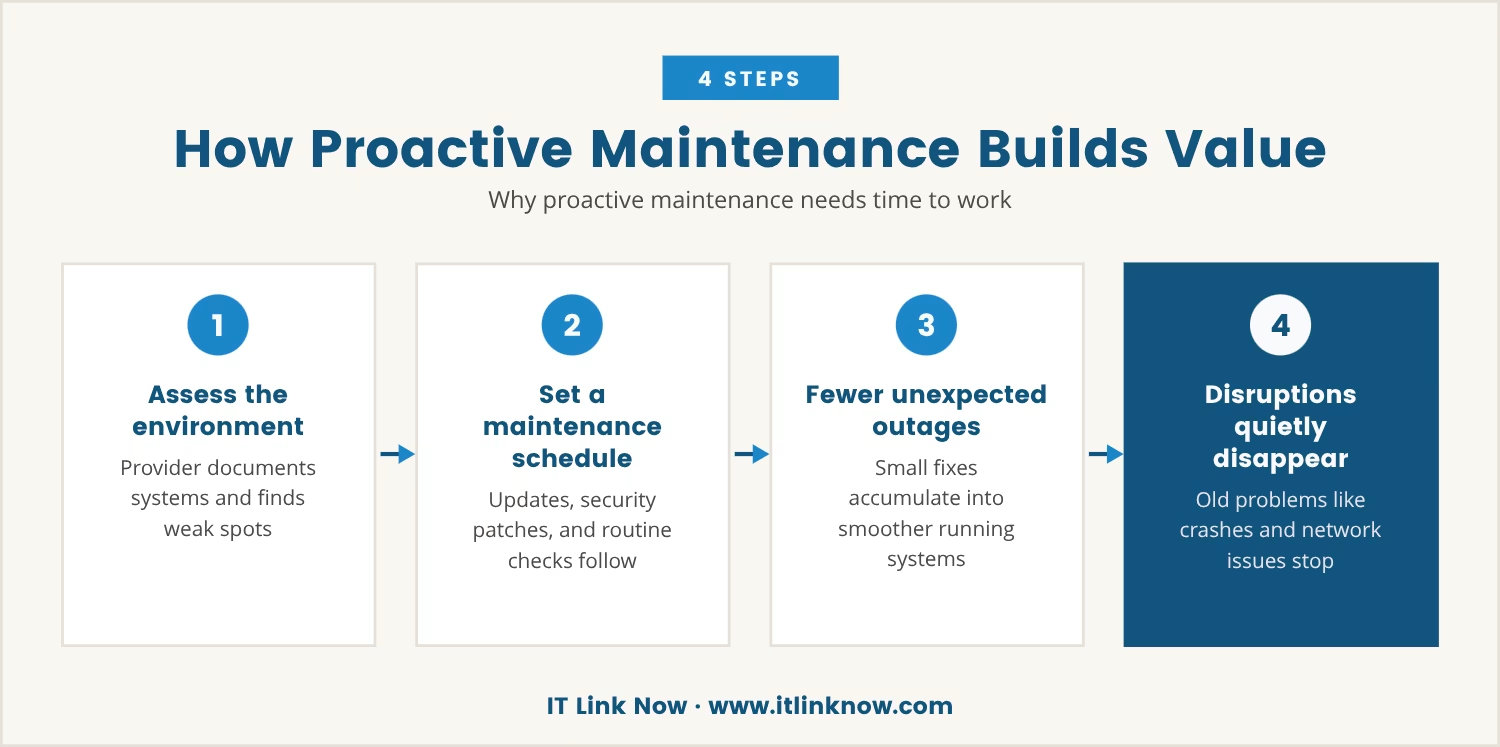
Proactive maintenance ranks among the biggest advantages of managed IT services, yet it doesn't deliver its full value overnight. When a provider first takes over, the work starts with assessing your environment, documenting your systems, and identifying weak spots.
Only after that initial phase comes a schedule for updates, security patches, and routine checks. Over time, this reduces the number of unexpected outages and helps your systems run more smoothly. Each small fix is barely noticeable on its own, but together they add up to fewer disruptions and less downtime.
The real benefit surfaces once you notice that problems you used to face—sudden server crashes, recurring network issues—just aren't happening anymore. That stability is only possible because of the steady, behind-the-scenes work that builds up over several months.
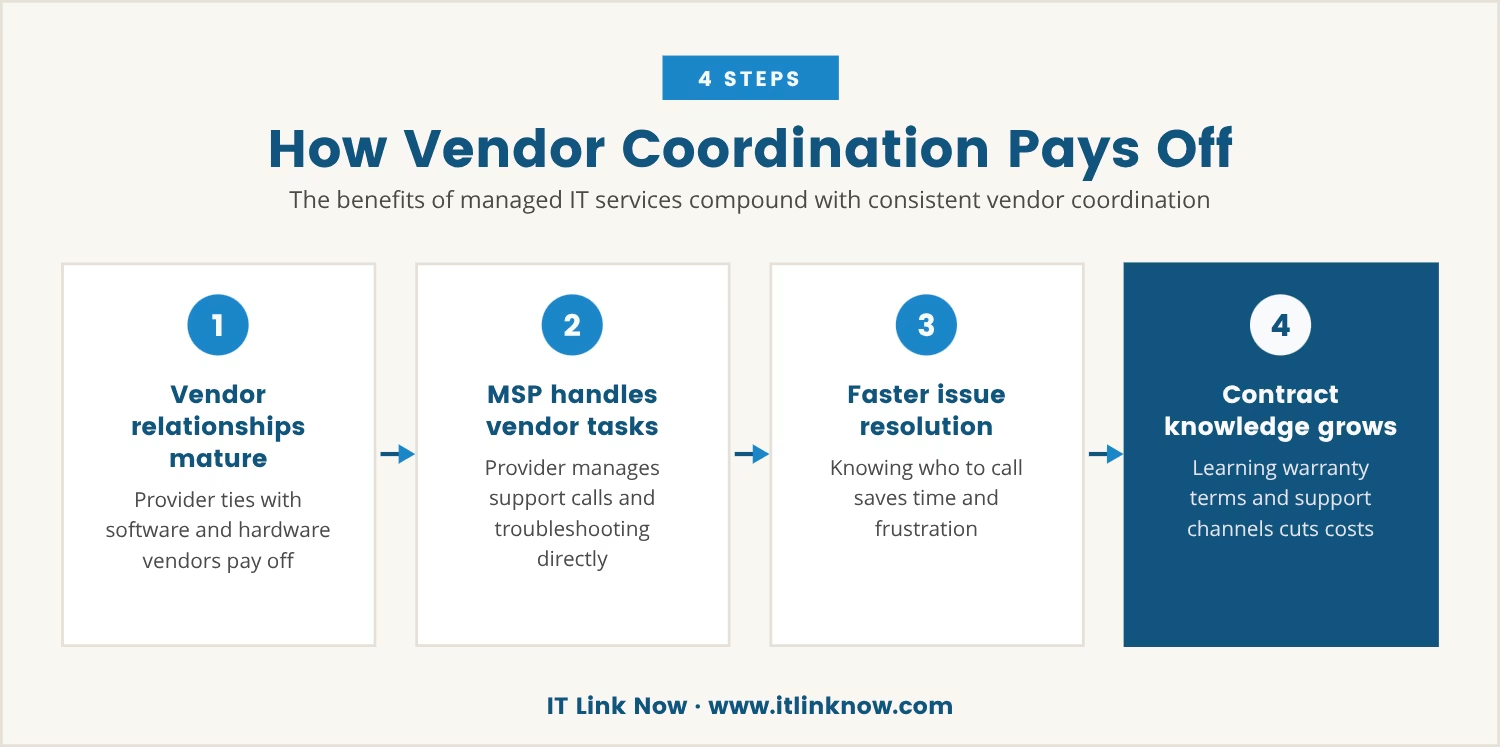
Vendor coordination is another area where managed IT services provide long-term value, and like proactive maintenance, it starts small. At first, your provider may seem like just another point of contact. As time goes on, though, their relationships with your software and hardware vendors start to pay off.
Instead of you chasing down support or troubleshooting issues with different vendors, your managed service provider (MSP) handles these tasks directly. They know who to call, what to ask, and how to get issues resolved quickly—which saves you time and cuts down on frustration.
Over several months, your MSP learns the ins and outs of your vendor contracts, warranty terms, and support channels. That knowledge lets them resolve issues faster and avoid unnecessary costs, so the more time they spend managing these relationships, the more efficient your IT operations become.
Proactive maintenance and vendor coordination don't just deliver value on their own—they build on each other, and some benefits of managed IT services only become clear once that compounding has had time to happen. Here are five non-obvious advantages that show up later:
Once your MSP has a handle on your systems, they start to spot and fix problems before those problems cause outages. Over time, this means fewer disruptions and more reliable operations.
With regular patching and monitoring, your defenses improve steadily. After several months, your risk of data breaches and cyberattacks drops significantly compared to before.
Managed IT services help you keep up with changing regulations. As your provider learns your business, they streamline compliance tasks and reduce the risk of missed requirements.
Once your MSP understands your needs, they can recommend upgrades or new solutions that support your growth, making it easier to add users, launch new projects, or expand locations.
As your provider takes on routine IT tasks, your team can focus on what matters most. Over time, this shift leads to higher productivity and better results across your business.
For companies in Florida, technology challenges can be unpredictable. Hurricanes, power outages, and rapid growth all put pressure on your IT systems, and managed IT services are built to handle exactly these demands—but only if you give them time to work.
Switching providers too soon interrupts progress already in motion. Change MSPs before their proactive approach has a chance to deliver, and you may end up starting over—losing the benefits that were just about to appear.
Set clear expectations with your provider instead. Ask about their timeline for proactive maintenance, patching, and vendor management, and understand that the most valuable improvements often take several months to show up. That patience is what gets you the full return on your investment.
How can you tell if your provider is on the right track, even before the big results show up? Look for these signs:
Taken together, these signals show that your MSP is laying the groundwork for lasting improvements, even if you haven't seen all the benefits yet.
It's easy to get impatient while waiting for results, but judge your managed IT provider too early and you risk missing out on the real payoff. The better approach is tracking progress over time, not just in the first few weeks.
Set up regular check-ins to review what's been done and what's planned next. Ask your provider to share their proactive maintenance schedule and vendor coordination efforts—that transparency helps you see the value building up, even before the biggest changes arrive.
The advantages of managed IT services are cumulative by nature. Each month of steady, behind-the-scenes work brings you closer to a more reliable, secure, and productive IT environment.

Many businesses with 15 to 70 users expect quick results from managed IT, but the most meaningful improvements take time to develop. At IT Link Now, we understand how frustrating it can be to wait for visible changes while behind-the-scenes work is underway.
We invite you to see how our team builds long-term value through steady, proactive support—let’s talk about what a patient, strategic approach could mean for your business.
Get onboarded for free with IT Link Now—no price increases, no surprise bills, just a smooth start for your business.
[.mspl-button-text]Start free onboarding[.mspl-button-text]
If your in-house team is stretched thin, or if you're struggling to keep up with updates and security, it might be time to consider managed IT support. Outsourcing can help you handle complex systems and free up your staff for more strategic work.
A proactive managed service provider will monitor your systems, apply updates regularly, and communicate about potential risks before they become problems. Over time, you should notice fewer emergencies and smoother day-to-day operations.
Yes, managed IT services often include disaster recovery planning as part of their offering. They can help you create backups, test recovery processes, and ensure your business can recover quickly from unexpected events.
By handling routine maintenance, troubleshooting, and vendor coordination, managed IT support lets your team focus on core business tasks. This shift can lead to higher productivity and less time spent on IT issues.
A managed IT provider brings specialized expertise, access to the latest best practices, and a proactive approach that's hard for a small in-house team to match. They also offer scalability, so your IT support can grow with your business.
We help South Florida businesses with 15+ employees get reliable IT support.
Let's onboard you for free, lock in your rate, and handle the switch.